
Disease Burden
Bronchiectasis is a chronic and progressive inflammatory lung disease often marked by unpredictable exacerbations1
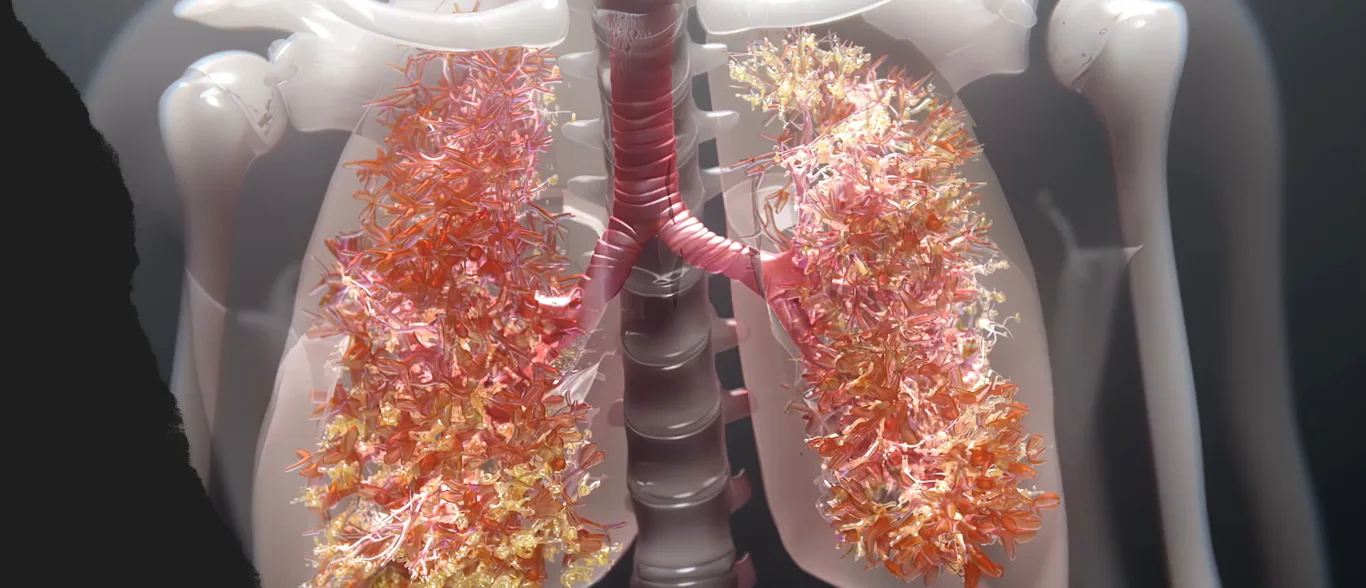
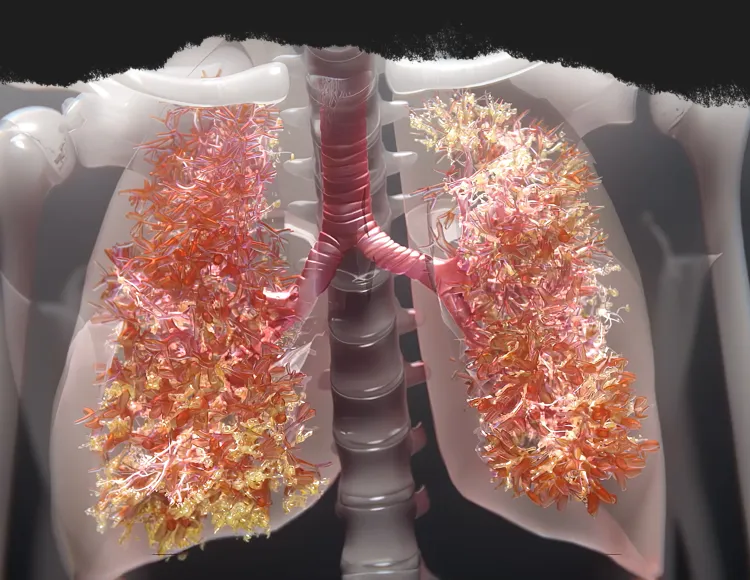
Bronchiectasis is a chronic and progressive lung disease usually marked by permanent, abnormal dilation and persistent inflammation of the airways.1,2
Approximately 500,000 people in the United States are diagnosed with bronchiectasis, with many more cases around the world.1,3 Although increasing in prevalence, there have long been unmet needs in bronchiectasis.1,4
In bronchiectasis, changes in the airway environment may cause neutrophils to become dysregulated, which leads to longer survival and release of excessive neutrophil serine proteases, including neutrophil elastase.5-7
The overactivity of neutrophil elastase in patients with bronchiectasis contributes to chronic inflammation, concomitant tissue damage, and an increased risk of future exacerbations.8-10
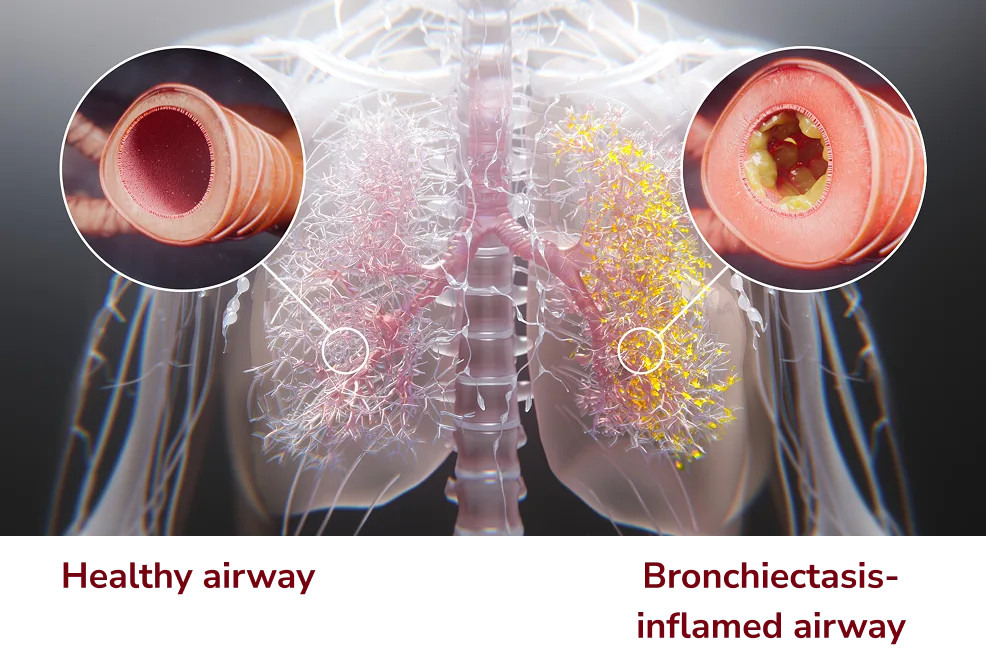
The presentation of bronchiectasis often overlaps with other respiratory conditions11,12
Bronchiectasis is known to be comorbid with other respiratory diseases and infections, such as COPD, asthma, Pseudomonas aeruginosa, and nontuberculous mycobacterial (NTM) lung disease.11,13
Bronchiectasis initially presents with chronic cough and sputum production in addition to recurrent exacerbations. These nonspecific symptoms mimic more common conditions, which experts believe often delays diagnosis or leads to misdiagnoses.12,14,15
Common symptoms associated with bronchiectasis1,16,17:

Chronic cough

Daily sputum production

Recurrent infections

Dyspnea

Fatigue

Hemoptysis
-
Chronic cough
-
Dyspnea
-
Daily sputum production
-
Fatigue
-
Recurrent infections
-
Hemoptysis
A definitive diagnosis of bronchiectasis requires both clinical criteria and radiological evidence1,14,17
- Clinical suspicion includes presence of symptoms and history of exacerbations1,17
- Findings on imaging include dilated airways, lack of airway tapering, and airway visibility in the periphery1,17
Bronchiectasis has several known etiologies and associated conditions, but up to 40% of patients with bronchiectasis have no specific identifiable cause.15,18
Exacerbations can play a critical role in bronchiectasis disease progression, with serious consequences for patients19
Patients with bronchiectasis often suffer from periods of worsening symptoms, or exacerbations, which contribute to the burden of disease and can affect patients’ quality of life.19
Identifying an exacerbation
There are no US guidelines that define a bronchiectasis exacerbation. However, a consensus definition from an expert committee defines an exacerbation as a patient experiencing the worsening of 3 or more of these symptoms over 48 hours, requiring a change in treatment20:
-
Cough
-
Breathlessness and/or exercise intolerance
-
Sputum volume and/or consistency
-
Fatigue and/or malaise
-
Hemoptysis

Sputum purulence
-
Cough
-
Fatigue and/or malaise
-
Breathlessness and/or exercise intolerance
-
Hemoptysis
-
Sputum volume and/or consistency
-
Sputum purulence
Having repeated exacerbations can increase a patient’s chance of having more in the future and may lead to hospitalization.19,21
Exacerbations contribute to an increased physical and mental burden for patients with bronchiectasis1,19
Exacerbations can negatively affect patients and their families, and are associated with1,19,22:
- Significant anxiety
- Lack of control
- Decreased quality of life
- Embarrassment
- Work and social interruptions

In a multicenter observational study (N=2,572), patients who had an exacerbation had nearly 2X the risk for another, compared to those who had none.19
Bronchiectasis exacerbations have been associated with an increase in exacerbation frequency over time, lower lung function, and increased all-cause mortality risk19,21,23
Most patients with bronchiectasis experience 1 or more exacerbations, resulting in greater disease burden over time21
A retrospective study of US commercial claims and Medicare supplemental core databases included data from 14,798 bronchiectasis patients aged ≥18 years and found that the majority of bronchiectasis patients experienced21:
- 1 or more exacerbations at Years 1 and 2 of follow-up
- Increased hospitalizations from Year 1 to Year 2
Pulmonary exacerbationa occurrences over time periods in patients with non-cystic fibrosis bronchiectasis (N=14,798)21

% of patients
Number of exacerbations:
% of patients
Number of exacerbations:
footnoteaPulmonary exacerbation defined here as an inpatient claim with a non-cystic fibrosis bronchiectasis diagnosis or a healthcare interaction, followed by an antibiotic prescription within 7 days.21
Source: Adapted from Flume PA, et al. ERJ Open Res. 2023;9(4):00021-2023.
Copyright ©Flume PA, et al 2023. This version is distributed under the terms of the Creative Commons Attribution License 4.0.
Most patients with bronchiectasis experience 1 or more exacerbations, resulting in greater disease burden over time21
A retrospective study of US commercial claims and Medicare supplemental core databases included data from 14,798 bronchiectasis patients aged ≥18 years and found that the majority of bronchiectasis patients experienced21:
- 1 or more exacerbations at Years 1 and 2 of follow-up
- Increased hospitalizations from Year 1 to Year 2
Pulmonary exacerbationa occurrences over time periods in patients with non-cystic fibrosis bronchiectasis (N=14,798)21
% of patients
Number of exacerbations:
% of patients
Number of exacerbations:
footnoteaPulmonary exacerbation defined here as an inpatient claim with a non-cystic fibrosis bronchiectasis diagnosis or a healthcare interaction, followed by an antibiotic prescription within 7 days.21
Source: Adapted from Flume PA, et al. ERJ Open Res. 2023;9(4):00021-2023.
Copyright ©Flume PA, et al 2023. This version is distributed under the terms of the Creative Commons Attribution License 4.0.
A history of recurrent exacerbations is associated with reduced FEV124
Data from a study of 2,950 patients with bronchiectasis aged ≥18 years enrolled in the US Bronchiectasis Research Registrya showed that:
- Patients with exacerbations before enrollment had a higher frequency of moderate-to-severe airway obstruction (FEV1 % predicted <50%) than those without
Percentage of patients with FEV1 % predicted <5024


footnoteaThe US Bronchiectasis Research Registry is a centralized database of patients with bronchiectasis not associated with cystic fibrosis. Patients included in this study were enrolled between September 2008 and March 2020 and had data available on exacerbations in the 2 years prior to enrollment.24
footnotebP value is for comparison across 4 exacerbation groups.24
Source: Lapinel NC, et al. ERJ Open Res. 2024;10(6):00185-2024.
FEV1=forced expiratory volume in 1 second.
Bronchiectasis patients can experience serious long-term effects from exacerbations, including higher risk of death19
Data from an observational study of 2,572 patients with bronchiectasis from 10 clinical centers across Europe and Israel showed that19:
Patients with 2 or more exacerbations per year at baseline had a 60% increased risk of 5-year all-cause mortality
Patients with 3 or more exacerbations per year at baseline had an 86% increased risk of 5-year all-cause mortality
Persistent symptoms aren’t always what they seem.
Could it bebronchiectasis?