
DIAGNOSING BE
Is it bronchiectasis?
How to know.
A CT scan is the standard way to determine
if you have bronchiectasis.


An estimated 500,000 people in the United States are diagnosed with bronchiectasis, but many more may have the disease without realizing it.
(brong-kee-ek-tuh-suhs), or BE, is a chronic and progressive inflammatory lung disease with symptoms that overlap with other more common respiratory conditions. But while the symptoms may be similar, BE still requires a unique approach to management and treatment.
DID YOU KNOW?
People living with bronchiectasis can experience delays in diagnosis of up to 12 years.a
footnoteaStudies show that diagnosis delays range from 3 to 12 years.
Some people might be living with bronchiectasis without knowing it.
If you have an existing respiratory condition and your symptoms continue to get worse despite treatment, there could be something more happening in your lungs. Talk to your doctor about whether or not you could have BE.
Studies have shown that approximately 1 in 4 people with , 1 in 3 with asthma, and more than 1 in 3 with lung disease may also have BE.b
Signs that you could have underlying BE include:

A wet, productive cough that won’t go away with treatment
Symptoms like coughing, shortness of breath, and fatigue that keep coming back
(this could be a flare)Coughing up a lot of mucus that looks yellow or green
Repeated lung infections
If this sounds like you, talk to a about getting a .
footnotebStudies have shown 20%–69% of people with COPD, 2%-47% of people with asthma, and 37% of people with NTM lung disease may also have BE.
Take this 5-question quiz to prepare for a conversation with a pulmonologist about bronchiectasis (BE).
If you already have a lung condition, untreated BE may be causing further damage to your lungs. That’s why it’s important to see a pulmonologist who has experience diagnosing and treating it.
Question 1 of 5
Do you have a history of other lung conditions?
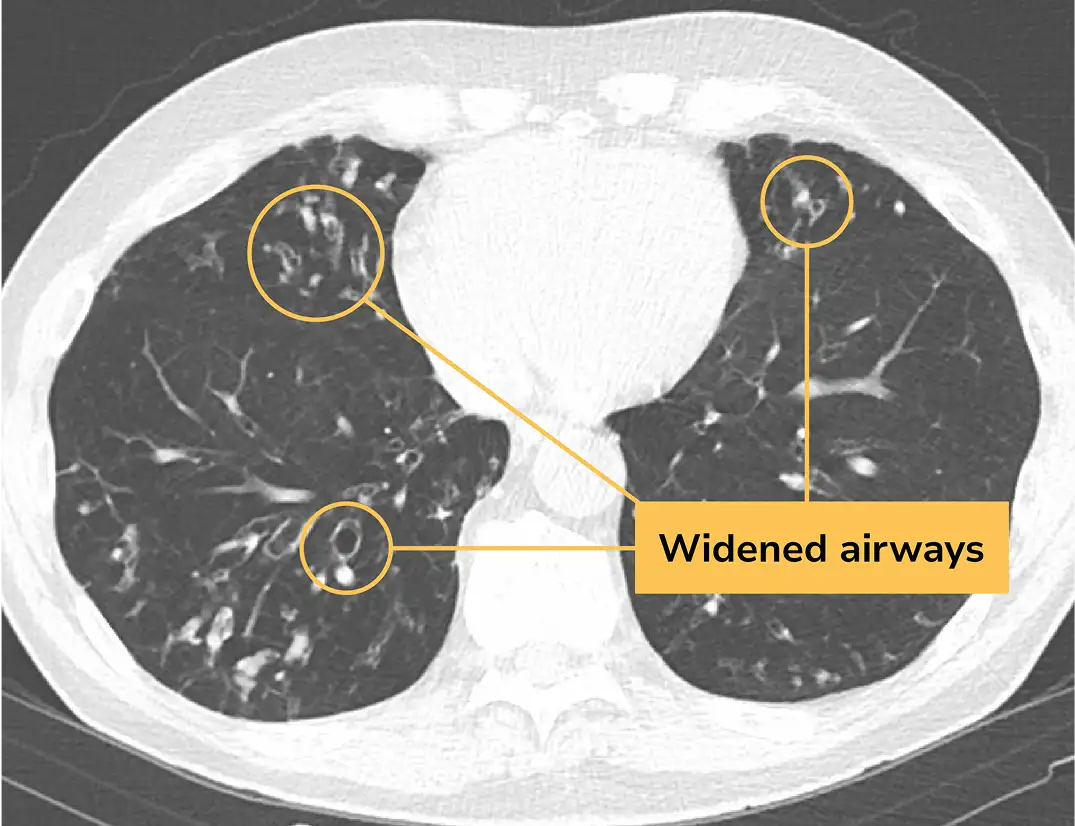
A CT scan can rule out or confirm bronchiectasis.

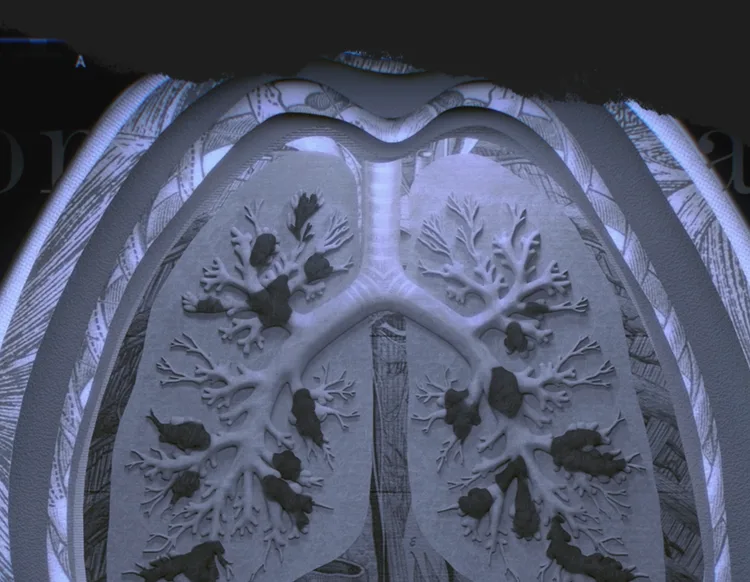
A CT scan is a type of chest scan that provides clear, detailed images of the lungs. It’s used to diagnose BE because it can reveal widening of the bronchi—a sign of the disease that tests like an X-ray might miss.
A pulmonologist will also perform a clinical evaluation to review your past lung conditions and current symptoms.
A CT scan of a lung with bronchiectasis
Bronchiectasis should be treated differently than other lung conditions.
BE requires its own unique treatment because it has multiple disease drivers. If you are diagnosed with BE, a pulmonologist may recommend a change to your treatment.
managed

Think your symptoms might be bronchiectasis (BE)?
Prepare for your doctor’s visit.

Why are my symptoms not getting better despite the treatment I take for my existing respiratory condition?
Should I be concerned that I continue to have flares?
I have seen a change in the mucus produced (amount or color) when I cough. Should I be concerned?
Are there other tests, like a CT scan, that I should get to determine if I have bronchiectasis?
Don’t have a pulmonologist? Find one who specializes in bronchiectasis today.
BE can be a complex disease and not all doctors have experience with diagnosing or managing it. A pulmonologist specializes in treating lung diseases and can diagnose BE with a CT scan.
Below are links to help you find BE care near you:
Take a deeper look at how BE is managed.
See how to workwith your doctor